ANOTHER FEATHER · PORTSCATHO MEMORIES
The Portscatho Institute
Memories of village life, by John Peters
John Peters recalls childhood visits to the Portscatho Institute, where his grandfather Victor was caretaker. From the snooker tables and reading room to the fishermen working below, his memories offer a glimpse into everyday village life in years gone by.

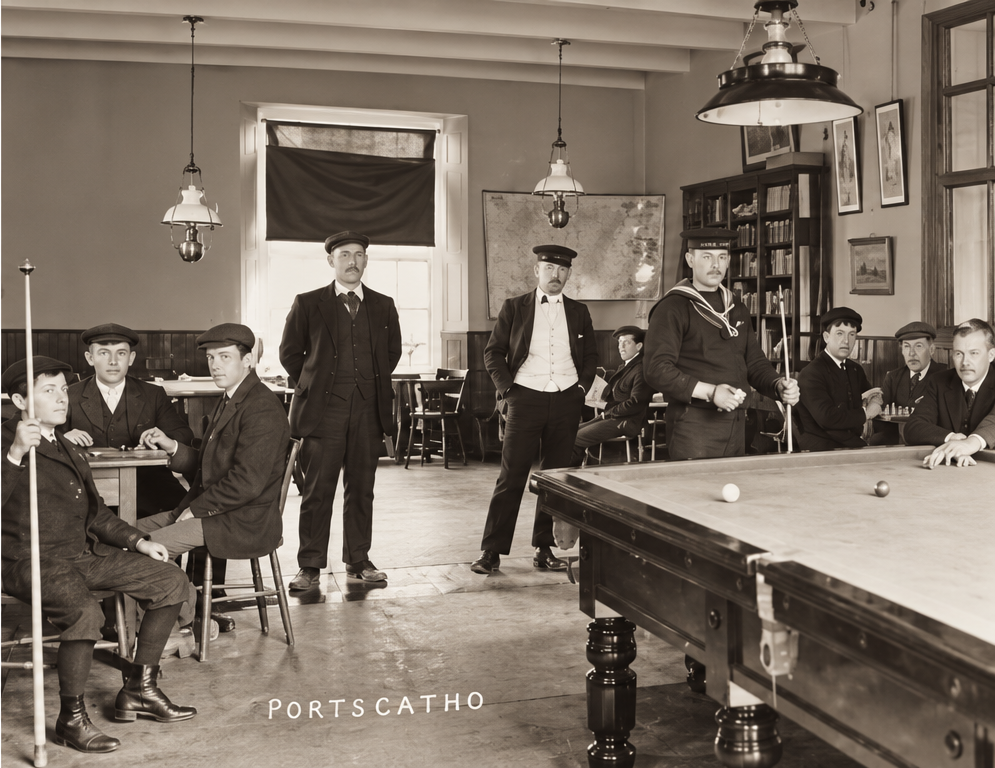
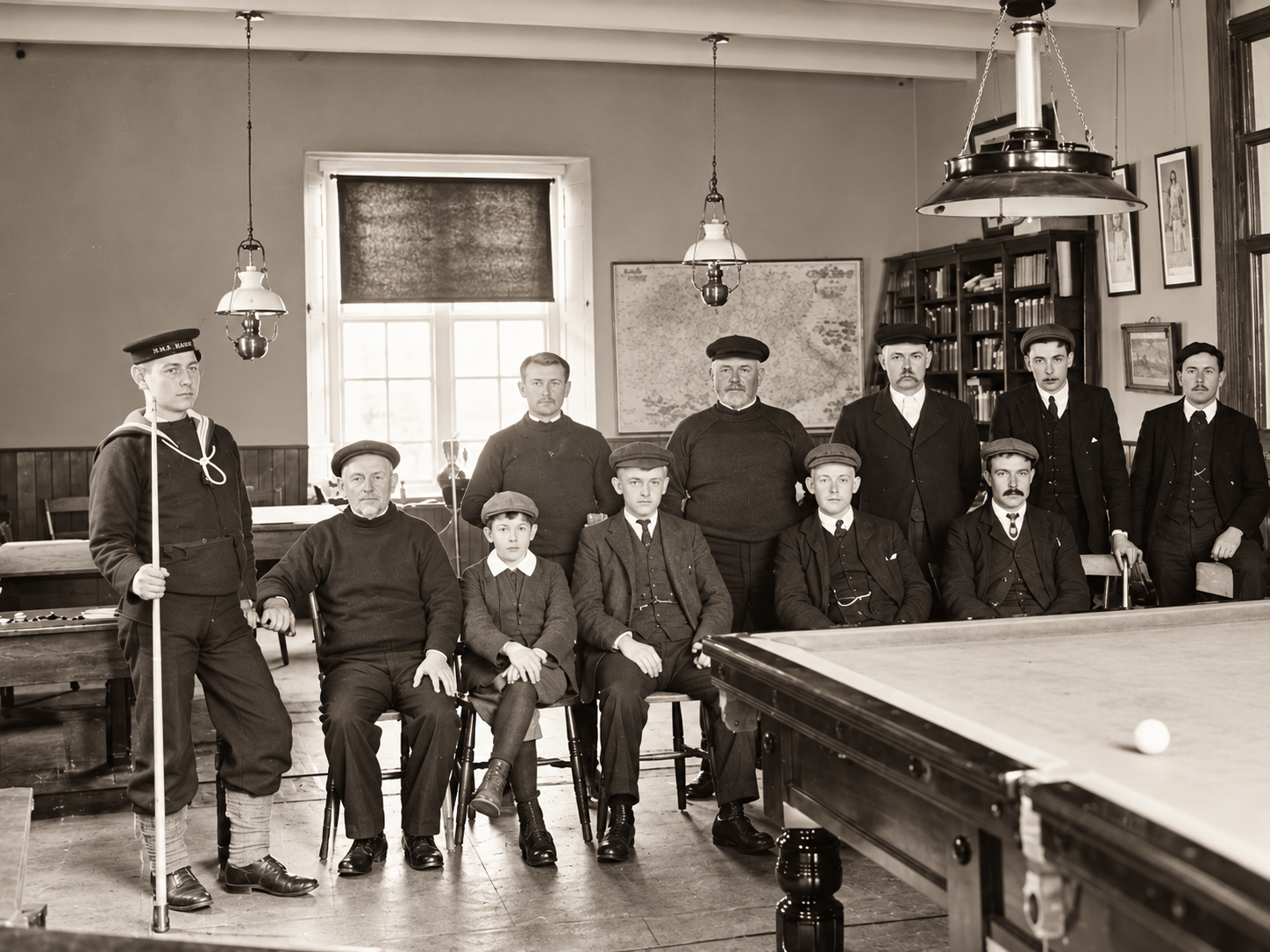
The photograph must be around 1940’s taken at the seaward end of what is now the bar of the Harbour Club. As one of the assembled gentlemen is dressed in naval ratings uniform it is probably just after the war.
I can remember as a young child being taken into that room by my grandfather, Victor Peters, he was the caretaker of the Institute at that time. He would lay out the daily newspapers on the tables by the windows for communal reading. On the right you can see large ‘french’ style wood and glass doors which closed across the reading area to separate the readers from the snooker players. No bar in those days!
Grandfather's main chore seemed to be stoking the coal burning free standing stoves to keep the place warm. As I recall there was no upstairs in those days, so all the heat rose up to the roof. The stoves used to smoke into the room and sometimes a thick cloud would come down as low as the snooker table lights. There were two full size tables in the room with low large light canopies hanging on chains from the high ceiling.
As we got older we were allowed to come into the room, but never into the reading area. We had to sit on the high solid wood benches with foot rests,on each side of the room and watch the ‘men’ play snooker or billiards. Absolutely, no talking or moving about, or we would be out with a thick ear!
My job was to remove the overnight covers from the tables,then brush the table cloths before taking the solid irons warming on the top of the stove and iron the snooker tables, this had to be done precisely in the direction of the nap of the cloth and at the right speed!
The snooker balls were polished and chalk blocks were put in holders which you could pull down on springs from the ceiling to chaulk the end of the cues. The triangle to rack up the balls was put in its place on the end of the light canopy.
The cues were communal and stored in a rack on the wall with spring retaining clips. Grandfather removed any damaged cues and refitted new felt tips.
Down below this room was a fisherman's store and workshop, full of wonderful boat bits, nets and crabpots. I remember watching in amazement John Eddy and Henry Craggs and Morley Billing as they crafted wood crabpots, made and mended nets.
And sometimes allowed to help them collect ‘withes’, willow sticks,for the pots from the valley running up behind Porthcurnick beach, bundle them together and lug them back to the Institute.
Life seemed very simple back then!
John Peters.